
Delving into Private Equity Firms USA: How They Make Billions, this introduction immerses readers in a unique and compelling narrative, with a tone that is both engaging and thought-provoking from the very first sentence.
Exploring the world of private equity firms in the USA unveils a fascinating landscape of financial prowess and strategic decision-making.
Overview of Private Equity Firms in the USA
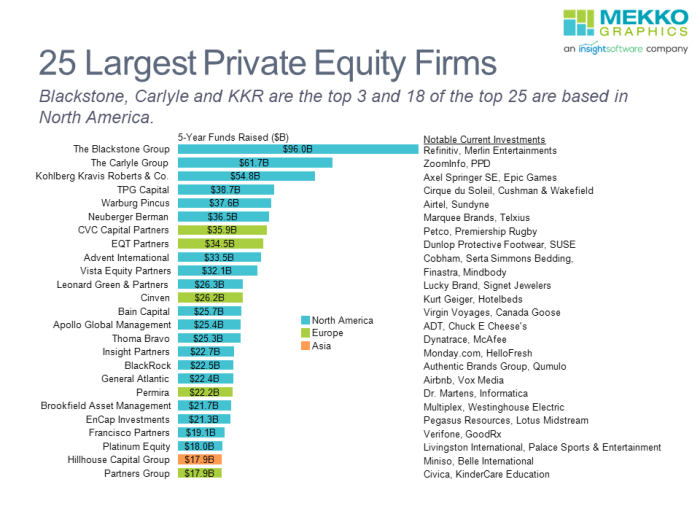
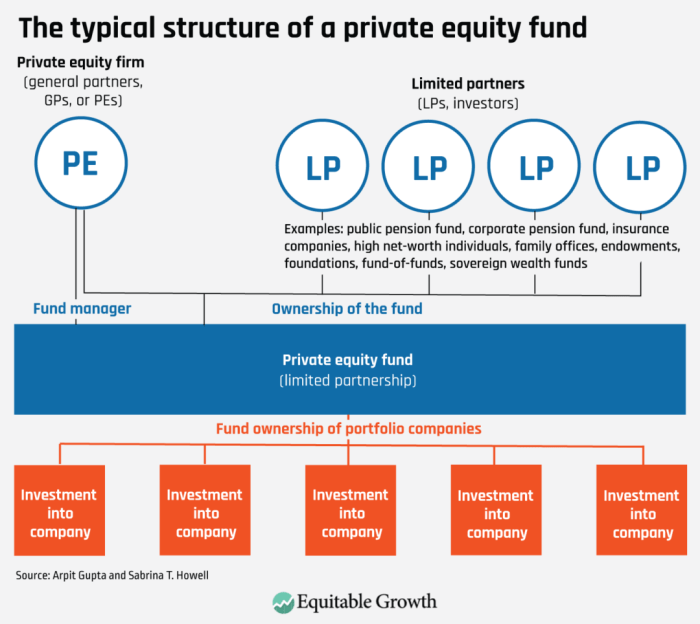
Private equity firms are investment management companies that pool funds from high-net-worth individuals, pension funds, and other institutional investors to acquire equity ownership in companies. These firms actively manage the companies they invest in with the goal of increasing their value over time before eventually selling them for a profit.Private equity firms play a significant role in the financial market by providing capital to companies that may not have access to traditional sources of financing.
They often target companies that are undervalued or have growth potential but require strategic guidance and operational improvements to unlock their full value.
Role in the Financial Market
Private equity firms act as catalysts for growth and innovation by injecting capital into businesses, restructuring operations, and implementing strategic initiatives to drive profitability. They bridge the gap between investors seeking high returns and companies in need of capital to expand or restructure.
- Private equity firms take an active management approach in the companies they invest in, often working closely with management teams to drive operational efficiencies and growth strategies.
- They provide expertise, resources, and industry connections to help portfolio companies scale and compete in the market.
- Private equity investments can also help companies weather economic downturns or financial challenges by providing stability and support.
Significance in the USA Economy
Private equity firms play a vital role in driving innovation, job creation, and economic growth in the USA. By investing in a diverse range of industries and companies, they contribute to the overall competitiveness and dynamism of the economy.
Private equity firms are known for their ability to turn around struggling businesses, create value through operational improvements, and drive long-term sustainable growth.
- They often target companies with growth potential in sectors such as technology, healthcare, and consumer goods, helping to fuel innovation and drive productivity.
- Private equity investments can lead to job creation, as companies expand their operations and hire additional staff to support growth initiatives.
- Through their strategic investments and operational expertise, private equity firms contribute to the overall economic development of the USA by fostering entrepreneurship and driving competitiveness.
Fundraising Strategies of Private Equity Firms

Private equity firms raise capital through various strategies to fund their investments and operations. These strategies play a crucial role in the success and growth of these firms.
Comparison of Fundraising Strategies
- Traditional Fundraising: Private equity firms typically raise capital from institutional investors such as pension funds, endowments, and insurance companies. They pitch their investment strategies and track record to attract these investors.
- Private Placements: Some firms opt for private placements where they raise capital from a select group of high-net-worth individuals or family offices. This strategy allows for more flexibility and confidentiality in fundraising.
- Fund-of-Funds: In this strategy, private equity firms raise capital from other investment funds rather than directly from individual investors. This can provide access to a diverse pool of capital sources.
Examples of Successful Fundraising Campaigns
- Blackstone Group: Blackstone raised a record $22 billion for its latest buyout fund in 2019, showcasing its strong fundraising capabilities and investor confidence in the firm.
- KKR & Co.: KKR successfully raised $13.9 billion for its latest Asia-focused fund, highlighting its ability to attract capital from investors interested in the region.
- Carlyle Group: Carlyle closed a $18.5 billion fund in 2020, demonstrating its fundraising prowess and ability to secure commitments from a diverse investor base.
Investment Strategies and Decision-Making Process
Private equity firms typically employ various investment strategies to maximize returns and mitigate risks. These strategies are crucial for achieving success in the highly competitive and dynamic investment landscape.
Investment Strategies
- Buyouts: Private equity firms acquire a majority stake in a company, aiming to improve its operations, streamline processes, and ultimately sell it for a profit.
- Growth Capital: Investing in established companies looking to expand, develop new products, or enter new markets to drive growth and increase value.
- Venture Capital: Funding startups and early-stage companies with high growth potential, providing capital and expertise to help them succeed.
- Distressed Investments: Investing in financially troubled companies with the goal of turning them around and generating profits.
Decision-Making Process
Private equity firms follow a rigorous decision-making process when selecting investment opportunities. This process typically involves:
- Evaluating the target company's financial performance, market position, growth potential, and competitive landscape.
- Conducting thorough due diligence to assess risks, opportunities, and potential returns associated with the investment.
- Developing a detailed investment thesis outlining the rationale behind the investment and the expected value creation strategies.
- Structuring the deal, negotiating terms, and securing financing to execute the investment.
Risk Management Strategies
Private equity firms employ various risk management strategies to protect their investments and optimize returns. Some common strategies include:
- Diversification: Spreading investments across different industries, sectors, and geographies to reduce concentration risk.
- Active Portfolio Management: Monitoring portfolio companies closely, providing operational support, and implementing strategic initiatives to enhance performance.
- Financial Engineering: Using financial tools and techniques to optimize capital structure, manage debt levels, and improve liquidity.
- Exit Planning: Developing a clear exit strategy from the investment, whether through an IPO, sale to another company, or a secondary buyout.
Value Creation Methods in Private Equity
Private equity firms employ various methods to create value in their portfolio companies, aiming to maximize returns on investment. These methods involve strategic initiatives, operational improvements, financial engineering, and overall growth strategies.
Operational Improvements
- Implementing cost-cutting measures to increase efficiency and profitability.
- Enhancing operational processes to streamline workflows and reduce waste.
- Introducing new technologies to drive innovation and productivity.
Financial Engineering
- Restructuring debt to improve the capital structure and reduce interest expenses.
- Optimizing working capital management to free up cash for growth initiatives.
- Utilizing leverage to enhance returns on equity investments.
Strategic Initiatives
- Identifying new markets or business opportunities for expansion.
- Acquiring complementary businesses to create synergies and increase market share.
- Implementing strategic partnerships or alliances to leverage resources and capabilities.
Growth Strategies
- Investing in research and development to drive product innovation and differentiation.
- Expanding geographically to reach new customers and markets.
- Diversifying product offerings to capture a larger share of the market.
Exit Strategies and Realization of Returns
Exit strategies are crucial for private equity firms to realize returns on their investments. These strategies determine how and when the firm will exit an investment, whether through an IPO, a sale to another company, or a recapitalization. The choice of exit strategy is influenced by various factors, including market conditions, the performance of the target company, and the overall investment strategy of the firm.
The success of a private equity investment often depends on the effectiveness of the chosen exit strategy.
Types of Exit Strategies
- Initial Public Offering (IPO): This involves taking the portfolio company public by selling shares to the public through a stock exchange.
- Trade Sale: In this strategy, the portfolio company is sold to another company in the same industry or a strategic buyer.
- Secondary Sale: Private equity firms may sell their stake in a portfolio company to another private equity firm.
- Recapitalization: This involves restructuring the capital of the portfolio company, often to return some capital to investors while maintaining ownership.
Factors Influencing Exit Strategy Choice
- Market Conditions: The state of the economy and the financial markets can impact the feasibility of different exit strategies.
- Company Performance: The performance of the target company and its growth potential play a significant role in determining the best exit strategy.
- Investment Objectives: The overall investment strategy of the private equity firm and its desired timeline for exiting an investment influence the choice of exit strategy.
- Industry Trends: Market trends and industry dynamics can also shape the decision-making process when selecting an exit strategy.
Impact of Exit Strategies on Success
- Timely Exits: Choosing the right exit strategy at the right time can significantly impact the overall success of a private equity investment by maximizing returns.
- Alignment with Goals: The chosen exit strategy should align with the firm's investment objectives and goals to ensure a successful outcome.
- Risk Mitigation: Effective exit strategies help in mitigating risks associated with investments and can enhance the firm's reputation in the market.
Final Conclusion
In conclusion, the journey through the inner workings of private equity firms in the USA sheds light on the mechanisms behind their ability to generate billions.
Commonly Asked Questions
What are private equity firms?
Private equity firms are investment management companies that provide financial backing and make investments in private companies.
How do private equity firms raise capital?
Private equity firms raise capital by soliciting investments from high-net-worth individuals, pension funds, and other institutional investors.
What are some common investment strategies used by private equity firms?
Common investment strategies include leveraged buyouts, growth capital investments, and distressed investments.
How do private equity firms create value in their portfolio companies?
Private equity firms create value by improving operational efficiency, implementing strategic changes, and growing the business.
What are some exit strategies employed by private equity firms?
Exit strategies include initial public offerings (IPOs), selling to strategic buyers, and secondary buyouts.