Payday Loan Alternatives: Safer Options You Need to Know sets the stage for this enthralling narrative, offering readers a glimpse into a story that is rich in detail with casual formal language style and brimming with originality from the outset.
In the realm of financial borrowing, exploring safer options is paramount. This guide delves into alternative solutions to payday loans, shedding light on a path towards more secure financial decisions.
Introduction to Payday Loan Alternatives
Payday loans are short-term, high-interest loans that are typically due on the borrower's next payday. While they may seem like a quick solution to financial emergencies, they often come with exorbitant fees and can trap borrowers in a cycle of debt.
Given the risks associated with payday loans, it is crucial to explore safer options for borrowing money. These alternatives not only offer more favorable terms and conditions but also help individuals avoid falling into debt traps.
The Importance of Exploring Alternatives
- Personal Loans: Unlike payday loans, personal loans typically have lower interest rates and longer repayment terms, making them a more affordable option for borrowing money.
- Credit Union Loans: Credit unions offer small-dollar loans with reasonable interest rates and flexible repayment options, providing a safer alternative to payday loans.
- Credit Card Cash Advances: While not ideal, credit card cash advances can be a less expensive option compared to payday loans if used responsibly and paid off quickly.
- Emergency Savings Fund: Building an emergency savings fund can help individuals avoid the need for payday loans altogether by providing a financial cushion for unexpected expenses.
Traditional Bank Loans

When it comes to borrowing money, traditional bank loans are often seen as a safer alternative to payday loans due to their lower interest rates and more favorable terms. Let's explore how traditional bank loans compare to payday loans and what you need to know about applying for them.
Comparison of Interest Rates and Terms
- Traditional bank loans typically have much lower interest rates compared to payday loans, making them a more cost-effective option for borrowing money.
- Bank loans also offer longer repayment terms, allowing borrowers more time to pay back the loan without facing high fees or rollover charges.
- Unlike payday loans, traditional bank loans are usually structured with fixed monthly payments, making it easier for borrowers to budget and plan for repayment.
Examples of Traditional Banks Offering Personal Loans
- Wells Fargo: Known for its wide range of personal loan options with competitive interest rates.
- Chase Bank: Offers personal loans with flexible terms and repayment options for qualified borrowers.
- Bank of America: Provides personal loans for various purposes, such as debt consolidation or home improvements.
Application Process for Traditional Bank Loans
- Start by researching different banks and their loan options to find the best fit for your needs.
- Gather necessary documents, such as proof of income, identification, and credit history, to support your loan application.
- Submit your loan application either online, in-person at a branch, or over the phone, following the bank's specific instructions.
- Wait for the bank to review your application, which may include a credit check and verification of your financial information.
- If approved, carefully review the loan terms and conditions before accepting the offer and receiving the funds.
Credit Union Loans

Credit unions are financial institutions that are member-owned and operate for the benefit of their members. Unlike traditional banks, credit unions are not-for-profit organizations that aim to provide affordable financial services to their members. One key difference is that credit unions are often more community-oriented and may offer lower fees and better interest rates on loans compared to banks.
Benefits of Obtaining a Loan from a Credit Union
- Credit unions tend to have lower interest rates on loans compared to traditional banks, which can save you money in the long run.
- Members of credit unions often have access to personalized customer service and more flexible repayment options.
- Credit unions may be more willing to work with individuals with less-than-perfect credit histories, offering a better chance of loan approval.
- By obtaining a loan from a credit union, you are supporting a local, member-owned financial institution that reinvests profits back into the community.
How to Join a Credit Union and Apply for a Loan
Joining a credit union typically requires meeting certain eligibility criteria, such as living in a specific geographic area or being affiliated with a certain organization. To join, you will need to fill out a membership application and pay a nominal fee to become a member.
Once you are a member, you can then apply for a loan by submitting the necessary documentation and meeting the credit union's lending requirements. The application process for a loan from a credit union is usually straightforward and can often be done online or in-person at a branch.
Peer-to-Peer Lending
Peer-to-peer lending, also known as P2P lending, is a method of borrowing and lending money without the involvement of traditional financial institutions like banks. In this model, individuals can lend money directly to other individuals or businesses through online platforms.
How it Works
Peer-to-peer lending platforms act as intermediaries, matching lenders with borrowers based on their creditworthiness and loan requirements. Borrowers create a profile outlining the amount they need and the purpose of the loan, while lenders can choose who to lend to based on risk and return preferences.
- Interest rates on peer-to-peer loans are typically lower than those offered by payday loan providers, making them a more affordable option for borrowers.
- Borrowers may have access to larger loan amounts through peer-to-peer lending compared to payday loans, which are usually capped at smaller amounts.
- Peer-to-peer lending platforms often have more flexible repayment terms, allowing borrowers to repay the loan over a longer period of time.
Popular Peer-to-Peer Lending Websites
- LendingClub: One of the largest peer-to-peer lending platforms, offering personal loans with competitive interest rates.
- Prosper: Another well-known platform that connects borrowers with individual investors, providing a range of loan options.
- Upstart: Known for using artificial intelligence to assess borrower risk, offering innovative loan products.
Online Installment Loans
Online installment loans are a type of loan that allows you to borrow a specific amount of money upfront and repay it over a set period in regular installments. This can be a safer alternative to payday loans because they typically have longer repayment terms and lower interest rates.
Repayment Terms and Interest Rates
Online installment loans offer more flexibility in repayment terms compared to payday loans. Borrowers can repay the loan in fixed monthly installments over a longer period, which can help manage budgeting and avoid the cycle of debt. Interest rates for online installment loans are generally lower than those of payday loans, making them a more affordable option for borrowers.
Tips for Choosing a Reputable Online Lender
- Research and compare multiple online lenders to find the best rates and terms that suit your financial needs.
- Check the lender's reputation by reading reviews and testimonials from other borrowers.
- Ensure the lender is licensed and compliant with state regulations to avoid scams or predatory lending practices.
- Review the terms and conditions carefully, including fees, penalties, and repayment options, before committing to a loan.
- Consider the lender's customer service and support to ensure you can easily reach out for assistance if needed during the loan process.
Paycheck Advance Apps
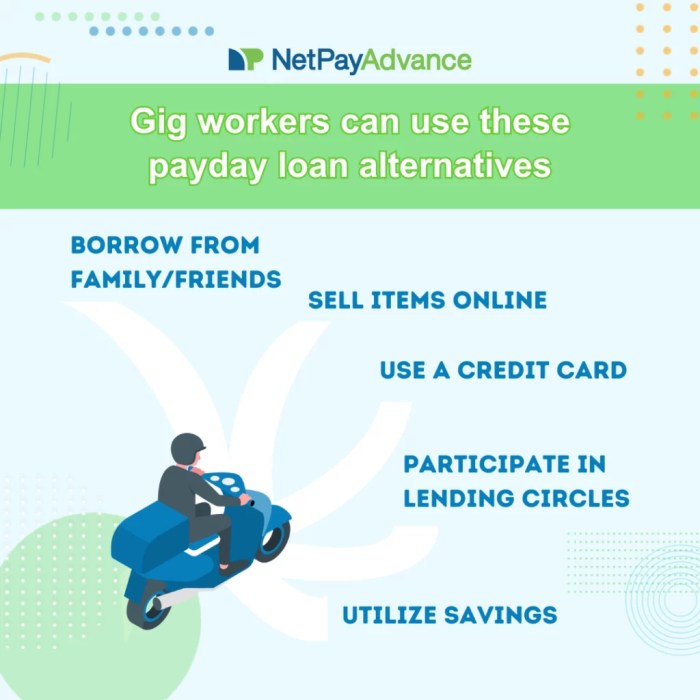
Paycheck advance apps are a modern alternative to payday loans that can help individuals access funds quickly without the high fees and interest rates associated with traditional payday lending.
These apps allow users to borrow small amounts of money against their upcoming paycheck, providing a more affordable and flexible option for those in need of quick cash.
Features and Benefits of Paycheck Advance Apps
- Instant Access to Funds: Paycheck advance apps typically offer quick approval and direct deposit of funds into the user's bank account.
- No Credit Check: Most paycheck advance apps do not require a credit check, making them accessible to individuals with poor credit scores.
- Low or No Fees: Unlike payday loans, paycheck advance apps often have low or no fees associated with borrowing money.
- Flexible Repayment Options: Users can typically repay the borrowed amount once they receive their paycheck, avoiding the cycle of debt common with payday loans.
Comparison of Paycheck Advance Apps
| App Name | Features | Benefits |
|---|---|---|
| Earnin | - No fees, but users can leave a "tip"- Cash-out limit based on hours worked | - Helps users avoid overdraft fees- Offers financial tracking tools |
| Brigit | - Free basic plan with optional monthly fee for additional features- Instant cash advance up to $250 | - Provides alerts to help users avoid late fees- Offers automatic advances based on account balance |
| Dave | - $1/month membership fee- Up to $100 cash advance with no interest | - Predicts upcoming expenses to prevent overdrafts- Helps build credit with on-time payments |
Employer-Based Loans
Employer-based loans are a type of loan that you can obtain through your employer. These loans are typically offered as a benefit to employees and are repaid through payroll deductions.
Advantages of Employer-Based Loans
- Lower interest rates: Employer-based loans often come with lower interest rates compared to traditional payday loans.
- No credit check: Since the loan is facilitated by your employer, they may not require a credit check, making it accessible to employees with poor credit.
- Convenient repayment: Repayments are deducted directly from your paycheck, making it easy to manage and ensuring timely payments.
- Flexible terms: Employers may offer flexible repayment terms based on your individual needs and financial situation.
Approaching Your Employer for a Loan
- Research your company's policies: Before approaching your employer, familiarize yourself with the loan policies and procedures in place.
- Prepare a repayment plan: Clearly Artikel how you plan to repay the loan and demonstrate your commitment to honoring the agreement.
- Schedule a meeting: Request a meeting with your employer to discuss the possibility of obtaining a loan and present your case professionally.
- Be transparent: Be honest about your financial situation and the reason you need the loan to gain your employer's trust.
Credit Card Cash Advances
Credit card cash advances are a way to access cash from your credit card, similar to withdrawing money from an ATM. While they can be a quick solution for immediate cash needs, it's essential to understand the fees and interest rates associated with this option.
Overview of Credit Card Cash Advances
- Credit card cash advances typically come with high fees, such as a cash advance fee and ATM fees.
- Interest rates on cash advances are often higher than the standard interest rate for purchases on the card.
- Repayment terms for cash advances can vary, but they usually start accruing interest immediately.
Ultimate Conclusion
Navigating the landscape of lending can be daunting, but armed with knowledge about safer alternatives to payday loans, individuals can make informed decisions about their financial well-being. This comprehensive discussion has illuminated the diverse options available, empowering readers to choose wisely for their future financial stability.
Question & Answer Hub
What are the risks associated with payday loans?
Payday loans often come with exorbitant interest rates and fees, trapping borrowers in a cycle of debt.
How do credit union loans differ from traditional bank loans?
Credit unions are member-owned financial institutions that typically offer lower interest rates and fees compared to traditional banks.
Are online installment loans a safer alternative to payday loans?
Yes, online installment loans provide more manageable repayment terms and lower interest rates than payday loans.